
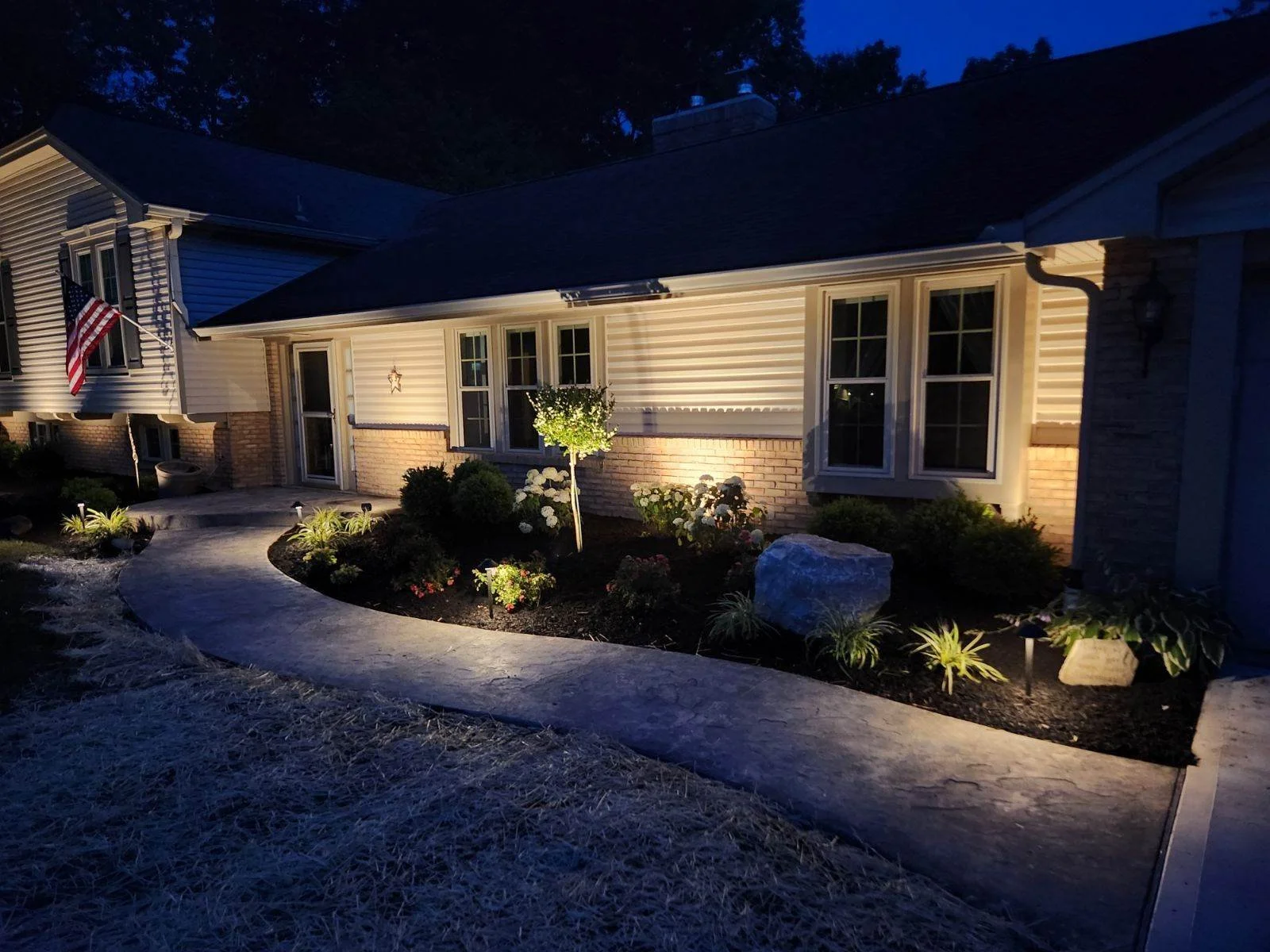
How to Choose the Right Outdoor Lighting for Your Home
How to Choose the Right Outdoor Lighting for Your Home
The right outdoor lighting does much more than make your home look beautiful after dark.
A professionally designed lighting system can improve safety, highlight your home's architecture, showcase landscaping, extend the use of your outdoor living spaces, and completely change how your property feels at night.
But with path lights, uplights, downlights, hardscape lights, step lights, and dozens of fixture options available, where do you start?
At Outdoor Lightscape, we believe great lighting starts with one thing:
A plan.
Here's what homeowners should consider when designing an outdoor lighting system.
1. Start With How You Use Your Property
Before choosing fixtures, think about what you want your lighting to accomplish.
Do you entertain on your patio?
Do you have dark walkways or steps?
Is there a beautiful tree you'd like to see from inside the house?
Would you like to showcase the front of your home?
Do you want your backyard to feel more inviting at night?
Every property—and every homeowner—is different.
Understanding how you use your outdoor spaces helps determine where lighting will make the biggest impact.
2. Highlight What Makes Your Property Unique
Great outdoor lighting isn't about lighting everything.
It's about lighting the right things.
A mature tree can become a dramatic nighttime focal point. Stone or brick can take on completely different textures when illuminated from below. Architectural peaks, columns, entryways, retaining walls, landscaping, and water features can all become part of the nighttime experience.
Look around your property and ask:
What deserves attention after the sun goes down?
Those features should become the foundation of your lighting design.
3. Layer Different Types of Lighting
One fixture shouldn't do everything.
Professional outdoor lighting designs typically combine several lighting techniques.
Uplighting can highlight trees and architecture.
Path lighting can provide subtle illumination along sidewalks and garden paths.
Hardscape lighting can be incorporated into retaining walls, seating walls, outdoor kitchens, and other structures.
Step lighting can help define changes in elevation.
Downlighting can create a soft, natural effect from trees or structures above.
When these techniques are layered together, the property gains depth and dimension instead of looking flat or overly bright.
4. Choose Warm, Comfortable Lighting
Color temperature makes a tremendous difference outdoors.
For most residential landscapes, we prefer a warm, inviting appearance rather than harsh, bright-white lighting.
The goal is to complement your home's materials and landscaping—not overpower them.
Brick, stone, wood, plants, and architectural details can look completely different depending on the color and intensity of the light illuminating them.
This is one of the reasons fixture selection is such an important part of professional lighting design.
5. Don't Forget Your Outdoor Living Areas
Your patio shouldn't disappear when the sun goes down.
Outdoor kitchens, fire pits, pergolas, pools, seating areas, decks, and patios are often some of the most valuable spaces around a home.
Lighting allows you to enjoy those spaces longer while creating an atmosphere that feels intentional and comfortable.
And remember:
You don't necessarily want the patio itself flooded with light.
Often, lighting the landscaping, trees, walls, steps, and features surrounding the patio creates a much more enjoyable environment.
6. Think About Safety Without Making It Look Commercial
Steps, sidewalks, elevation changes, entrances, and pathways should be easy to navigate after dark.
But functional lighting doesn't have to look industrial.
Fixtures can often be positioned or integrated into the landscape so they provide the illumination you need while remaining almost invisible during the day.
That's where thoughtful design makes the difference.
7. Plan for the Future
A good outdoor lighting system shouldn't be designed only for today.
Maybe you're adding a patio next year.
Maybe your new landscaping will double in size over the next several seasons.
Maybe a pool, outdoor kitchen, or fire pit is part of your future plans.
Your transformer, wiring, fixture placement, and overall system design should take future expansion into consideration whenever possible.
Planning ahead can make adding to your system much easier down the road.
The Best Outdoor Lighting Is Designed for YOUR Home
There isn't a universal package that works for every property.
A smaller home may need only a carefully selected group of fixtures to create an incredible transformation. A larger property may benefit from multiple lighting zones and techniques.
That's why we approach outdoor lighting as a design project, not simply a fixture installation.
At Outdoor Lightscape, we design and install professional low-voltage outdoor lighting systems throughout the Dayton and Cincinnati, Ohio areas.
Our goal isn't to put as many lights as possible around your property.
Our goal is to make your property look incredible after dark.
See the Difference Before You Decide
Wondering what professional outdoor lighting could do for your home?
Schedule a FREE nighttime lighting demonstration with Outdoor Lightscape.
We'll bring professional lighting fixtures to your property, temporarily position them around your home and landscape, and let you experience the difference for yourself—before making a final decision.
See your home in a whole new light.
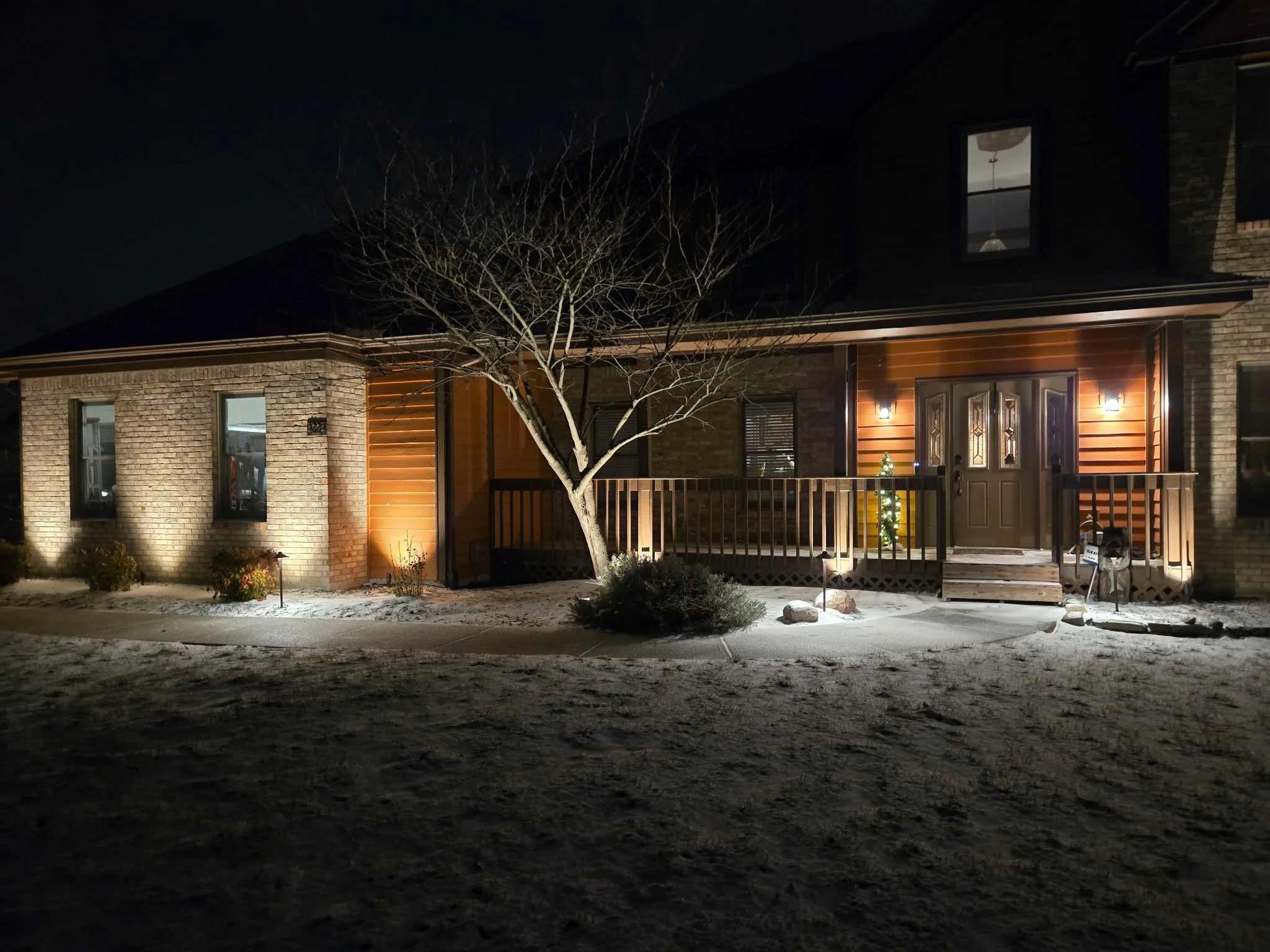
5 Outdoor Lighting Mistakes That Can Ruin a Beautiful Home
5 Outdoor Lighting Mistakes That Can Ruin a Beautiful Home
Outdoor lighting can completely transform a home after the sun goes down. The right lighting adds depth, highlights architecture and landscaping, improves visibility, and creates an outdoor space that feels just as inviting at night as it does during the day.
But great outdoor lighting isn’t about simply adding more lights.
It’s about putting the right light in the right place.
Here are five common outdoor lighting mistakes we see—and how a professional lighting design can make all the difference.
1. Using Too Much Light
One of the biggest misconceptions about outdoor lighting is that brighter is better.
It isn’t.
When fixtures are too bright or too numerous, the result can feel more like a commercial parking lot than a professionally designed landscape. Excessive brightness can create glare, eliminate shadows, and actually make it harder to appreciate your home’s architecture and landscaping.
A great lighting design uses contrast.
Some areas should be illuminated. Others should remain darker. That balance creates depth, dimension, and the dramatic appearance that makes professionally designed outdoor lighting stand apart.
2. Lighting Everything the Same Way
Your home, trees, landscaping, walkways, patios, and outdoor living spaces shouldn't all be illuminated with the same fixture or technique.
Different features call for different approaches.
Architectural uplighting can showcase the character of a home. Carefully positioned fixtures can bring mature trees to life after dark. Path lights can provide subtle illumination along walkways, while hardscape lighting can be incorporated into steps, walls, patios, and outdoor living areas.
The goal isn't to see the fixtures.
The goal is to experience the effect they create.
3. Forgetting About the View From Inside
Outdoor lighting isn't only for when you're outside.
Think about what you see when you're sitting in your kitchen, living room, or family room at night.
Without landscape lighting, those windows often become large areas of darkness. Strategically illuminating trees, landscaping, patios, and other features extends your view beyond the walls of your home.
Suddenly, your landscape becomes something you can enjoy all evening—even from inside.
4. Ignoring Walkways, Steps and Entrances
Beautiful outdoor lighting should also be functional.
Walkways, steps, driveways, entrances, and changes in elevation deserve careful attention. The key is providing enough illumination to comfortably navigate the property without creating unnecessary glare.
Well-designed pathway and step lighting can improve visibility while becoming part of the overall appearance of the landscape.
Safety and beauty don't have to compete. A great design accomplishes both.
5. Designing for Today Instead of Tomorrow
Landscapes change.
Plants grow. Trees mature. Outdoor living spaces are added. Patios expand. New landscaping gets installed.
A professionally designed low-voltage lighting system should be planned with those changes in mind.
That means thinking about transformer capacity, wire placement, fixture locations, future expansion, and how the landscape will look several years from now—not simply how it looks today.
Great Outdoor Lighting Should Feel Effortless
When outdoor lighting is designed correctly, most people won't immediately notice the fixtures.
They'll notice the home.
They'll notice the landscaping.
They'll notice the warm pathway leading toward the backyard, the texture of a stone wall, the canopy of a beautiful tree, or the architecture that disappears into darkness during the day.
That's what professional outdoor lighting is about.
At Outdoor Lightscape, we specialize in designing outdoor lighting systems that enhance the beauty, functionality, and nighttime experience of properties throughout the Dayton and Cincinnati, Ohio areas.
Every property is different, which is why we believe the best lighting designs begin by seeing your home after dark.
See Your Home in a Whole New Light
Not sure what outdoor lighting would look like on your property?
Schedule a FREE nighttime lighting demo with Outdoor Lightscape.
We'll help you explore what is possible and show you how thoughtfully designed lighting can completely change the way your home looks and feels after sunset.


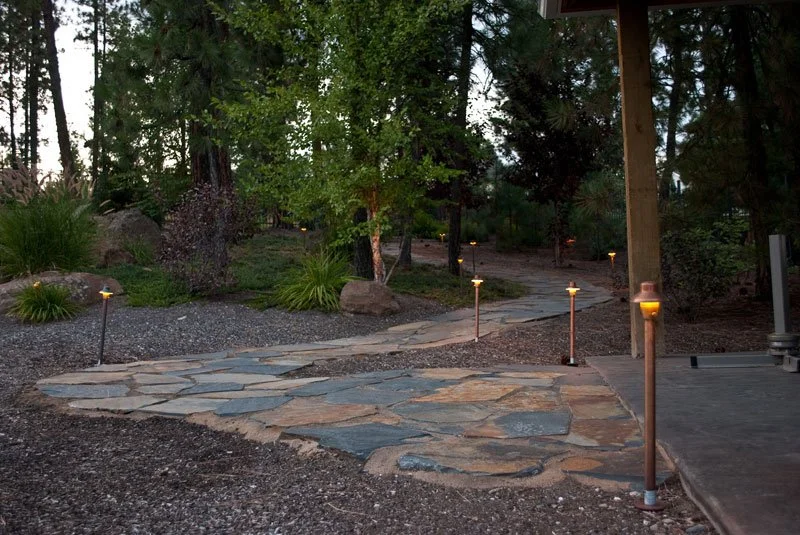
11 Professional Outdoor Lighting Techniques
Transform Your Outdoors with Stunning Lighting
“We are extremely happy with the way our outdoor landscape lighting turned out. Called back promptly, showed up when he said he would, listened to our request, and the work was extremely well done. Highly recommended.
